
About Us

Rethinking Biodiversity Inventories in the Digital Age

NAHPU (NAtural History Project Utility). It is a free, open-source project that supports major desktop and mobile operating systems. The current version is equipped to catalog specimens of mammals and birds.

Etymology

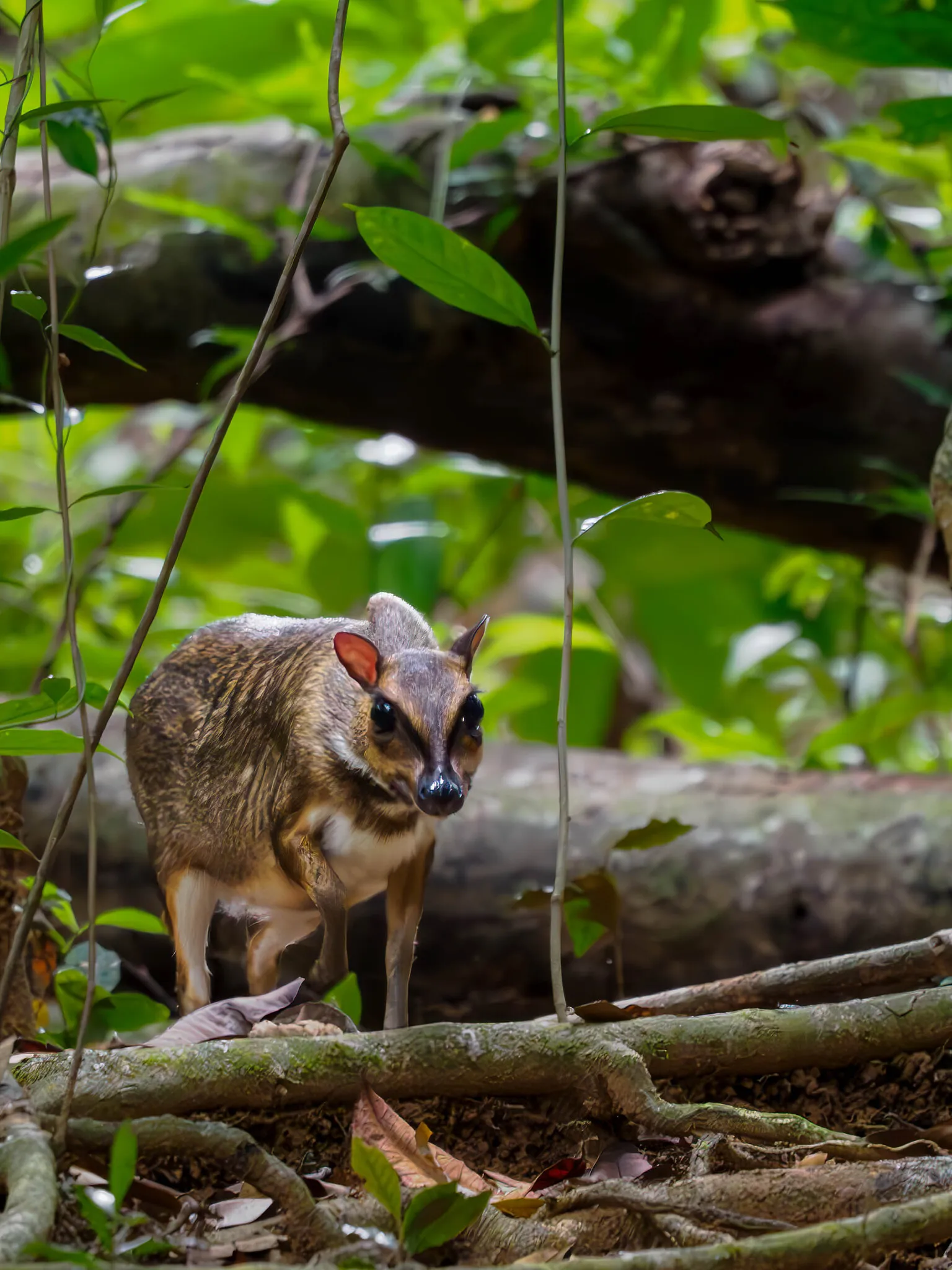
The name "NAHPU" is derived from the Greater Malay Chevrotain, Tragulus napu . This small deer is found in the tropical forests of Southeast Asia.

Our Mission

🛠️ Simplify Complex Fieldwork

NAHPU is designed with genomic studies and remote fieldwork in mind. It simplifies associating digital assets — such as photographs or audio recordings — and specimen parts — such as tissue or parasite samples — with voucher specimens. Built with high-performance programming languages and frameworks, NAHPU runs smoothly across a wide range of devices while minimizing battery usage. We continuously work to improve its performance and stability.
❤️ Support Responsible and Reproducible Research

NAHPU lets you record detailed information about collected specimens, including their origin, collection date, site, measurements, field personnel, and collection method. Real-time statistics help you monitor collecting activities and make informed decisions to prevent over-collection, ensuring your fieldwork is both responsible and reproducible.

🤝 Promote Data Sharing and Collaboration

NAHPU is built to streamline workflows and foster collaboration among researchers. By adhering to open standards, it enables seamless data sharing and supports automatic pipelines for transferring data from the field to museum databases. The current version partially supports the Darwin Core standard and follows the FAIR principles. We are committed to further strengthening compliance with these standards.

♿️ Accessible for Everyone

NAHPU is a free, open-source app available on all major desktop and mobile platforms. Designed for natural history collectors and researchers, it prioritizes user-friendliness and accessibility. We use the Material Design system to deliver an intuitive, visually appealing interface that also accommodates users with disabilities. We are actively working on internationalization, including multi-language and locale support. We welcome contributors of all backgrounds — come help make NAHPU more inclusive for everyone!

Development Roadmap of 2026

⚡ Efficiency

We are integrating more Rust into the NAHPU codebase. Rust's performance characteristics and memory safety improve the overall robustness of the app, and its high-quality GIS libraries will strengthen NAHPU's spatial data processing capabilities. Alongside this, we are refactoring existing code for better speed and memory efficiency, and expanding developer documentation to make the codebase easier to navigate and contribute to.

🔁 Reproducibility

Our primary goal is full implementation of the Darwin Core standard and the FAIR principles, improving the interoperability and reusability of NAHPU data. We are also enhancing data import and export capabilities to make collaboration easier. Building on existing QR and barcode scanning support, we plan to streamline the post-fieldwork inventory process — allowing users to scan specimens and automatically populate records — and integrate this with specimen tag printing.

🌍 Inclusivity

We are expanding NAHPU's localization to support more languages, making the app accessible to non-English speakers worldwide. We are also improving the experience for users with disabilities: the current version already supports voice input via the operating system's accessibility features, and we plan to add screen reader support and additional assistive features in future releases.